Plan your trip
Punta Cana Seaweed: How Bad Is It Now?
Where sargassum shows up along the Punta Cana coast, which months stay clearest, and how to check conditions for your beach before you travel.

- Updated
- Published
- Ricardo Pérez Fernández
- 2 min read
- Plan your trip
Satellite signal · NOAA
ExperimentalOffshore inundation-risk product for 21 October 2026: of the 26 rated coastal stretches, 4 High, 16 Elevated, 6 Moderate and 0 Lower.
Latest reading on file · auto-updates daily from NOAA, refreshed while you read. A 7-day offshore proxy, not a beach report — it does not change the Planning Index below. Source: NOAA AOML / CoastWatch Caribbean and Gulf of America Node with the University of South Florida. Experimental product, subject to validation by NOAA/AOML, NOAA CoastWatch/OceanWatch and USF.
Where it comes from
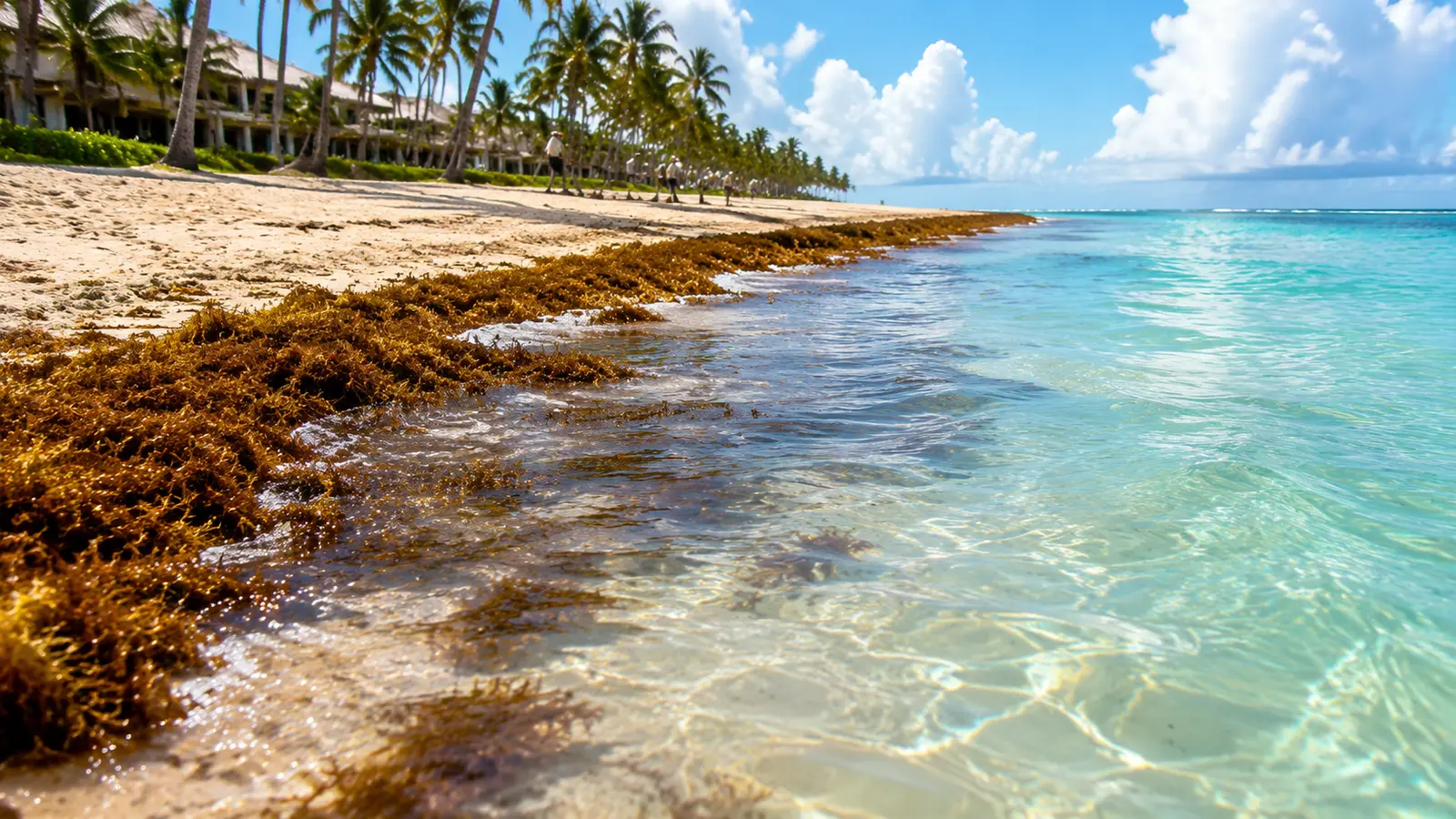
Sargassum is a free-floating brown seaweed named for the Sargasso Sea, where it grows in calm, clear open water. Out in the ocean it is not a nuisance at all — it is nursery habitat and shelter for marine life. It only becomes a problem when currents push it onto a coastline.
Over the past decade it has arrived in volume on Caribbean, Gulf of Mexico and Florida shorelines, disrupting local fishing and forcing resorts into daily cleanup operations.
It is also not new. Columbus recorded the same seaweed in 1492 on the way to Hispaniola, and his crew were unsettled enough by it to think their ships might be dragged under.
The seasonal pattern
The influx tracks the heat. Seaweed on the east coast is heaviest through the summer months and thins out as temperatures drop. Between November and May — the coolest stretch of the Dominican year — it is rare.
If clear water is the point of the trip, that window is the one to book. Our companion piece on how Punta Cana seaweed disappears during winter covers what changes in those months.
Not every beach is the same
Punta Cana is a long coastline, and the seaweed does not land on all of it equally. What matters is the angle a beach sits at relative to the Atlantic:
- Beaches that face east, straight into the open ocean, catch the most.
- Beaches sheltered by reef, headland or a more northerly or southerly aspect catch noticeably less.
That is why two resorts a short distance apart can report completely different conditions in the same week. It is worth checking recent guest photos for the specific property rather than for "Punta Cana" as a whole.
What resorts do about it
Properties along the strip run cleanup crews, and on many beaches the sand is cleared each morning before guests are out. That does not make a heavy influx invisible, but it does mean a bad night rarely equals a ruined day.
Planning the rest of the trip
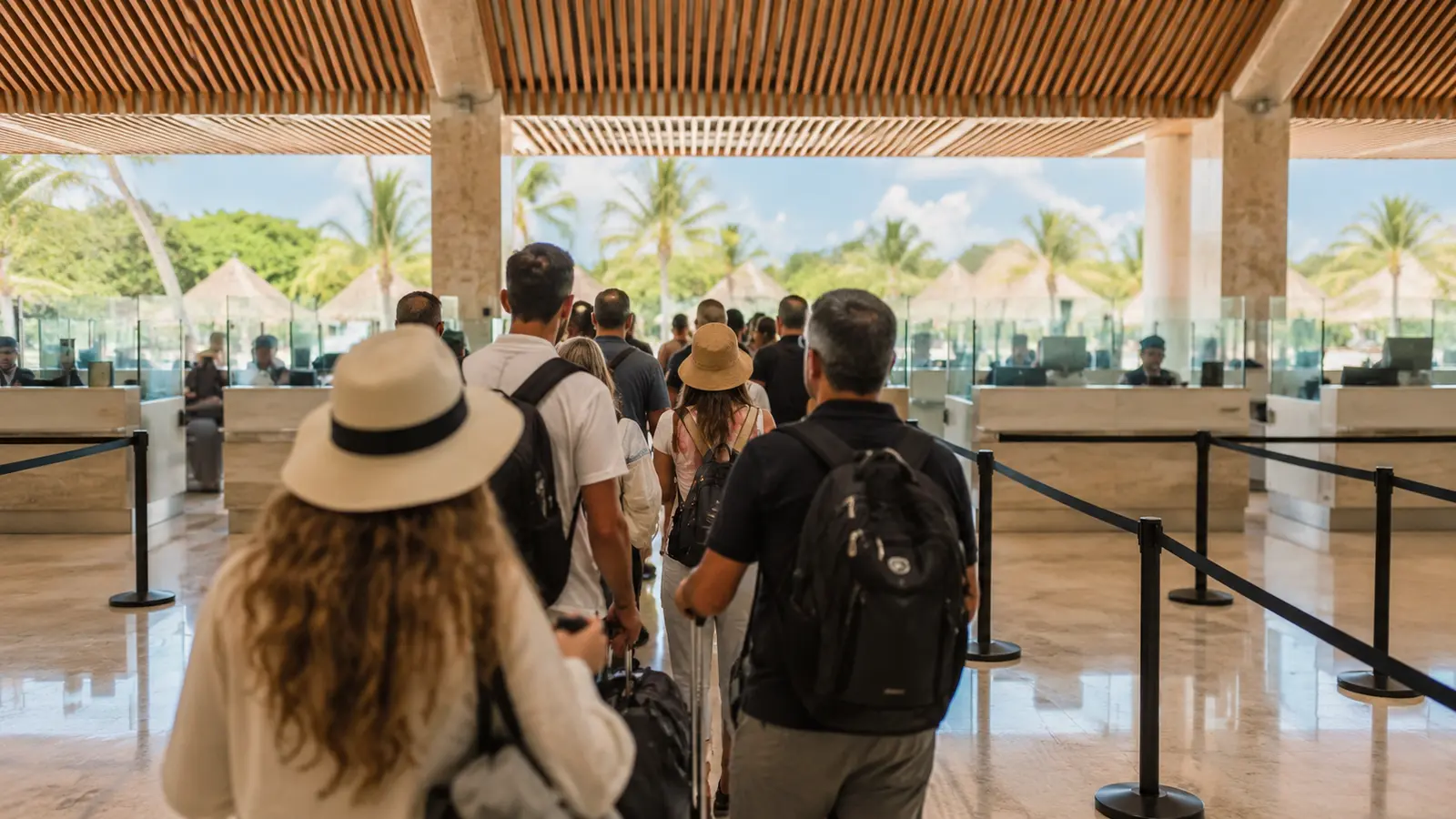
Whatever the water is doing, the arrival should be dull in a good way. We monitor your flight, meet you at the arrivals exit with a tablet showing your name, and drive you directly to your resort — with two hours of free waiting time after landing if immigration is slow.
Book your Punta Cana airport (PUJ) transfer before you fly, or see the Bávaro route page for the beach corridor most guests are heading to. Beach-hopping between corridors during the stay is what transportation in Punta Cana is for.
The whole-island guide
For every coast month by month — with a map of the Dominican Republic and a Planning Index per destination — read the Dominican Republic sargassum guide.