Every entity below is a distinct recommendation in the finder. The one-line answer, why you would choose it, and the tradeoff nobody puts in the brochure.
Punta Cana & the East
The country's best-connected resort region: the airport is inside it, the all-inclusive choice is the largest, and everything is built for an effortless first visit.
Why choose it: The widest all-inclusive selection in the country, from family megaresorts to adults-only; Its own international airport (PUJ) sits inside the resort region; Golf, catamarans and excursions run daily at scale.
Tradeoff: It is the busiest corridor in the country — this is not where you go for solitude.
Punta Cana is the broad region; Bávaro, Cap Cana and Uvero Alto within it are distinct experiences — compare them separately below.
Punta Cana & the East
The resort strip itself — the densest run of all-inclusives, beach clubs and nightlife in the country, with plazas and restaurants filling the gaps.
Why choose it: The most hotel rooms and the most beach clubs of any Dominican corridor; More off-resort restaurants, plazas and nightlife than anywhere else on the east coast; El Cortecito and Los Corales add a walkable pocket to the strip.
Tradeoff: Density is the point — quieter stays live north in Uvero Alto or south in Cap Cana.
Punta Cana & the East
The upscale gated side of the east: a marina, championship golf, private villas and a short, polished list of luxury hotels — minutes from the airport.
Why choose it: Championship golf, a marina and Juanillo beach inside one gated development; Luxury hotels and private villas instead of a resort strip; One of the shortest airport arrivals in the country.
Tradeoff: The all-inclusive selection is deliberately small — this is not the strip.
Punta Cana & the East
The quiet far-north end of the resort region: fewer hotels, wide-open beach, and nothing to walk to — which is exactly the appeal.
Why choose it: Space between resorts and a long, undeveloped beachfront; A favourite for weddings, wellness stays and couples who want resort comfort without the strip; Still inside the PUJ arrival corridor.
Tradeoff: There is no town: every dinner out or excursion is a planned drive.
Punta Cana & the East
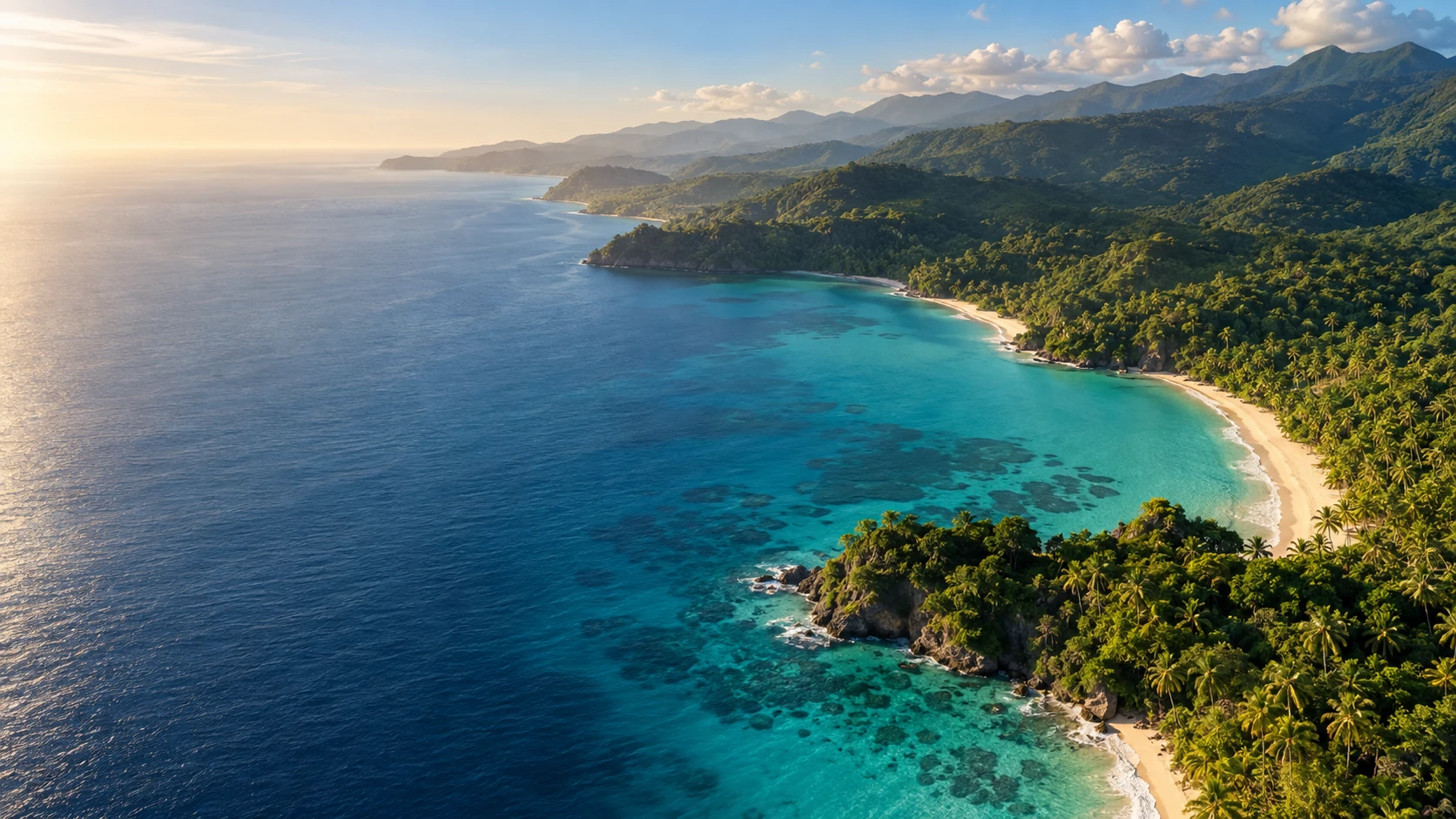
The emerging resort coast: a handful of newer resorts on a dramatic bay between mountains and sea, with almost nothing built around them.
Why choose it: Newer resorts on Playa Esmeralda with the Cordillera Oriental rising behind the beach; Waterfalls, lagoons and mountain excursions start at the back door; The quietest large-resort experience on the east coast.
Tradeoff: Everything outside the resort is a planned private drive.
La Romana & Bayahibe
Calm, sheltered Caribbean water on the south coast: a fishing village next to a compact resort zone, the country's diving capital, and the Saona boats at the pier.
Why choose it: Sheltered south-coast water — the calmest reliable swimming among the resort zones; Saona and Catalina island trips and the country's best diving leave from here; Village restaurants give an off-resort evening without a long drive.
Tradeoff: Nightlife is a handful of village bars, not a scene.
Bayahibe is the village; Dominicus next door is the beach-resort zone with a public promenade — one destination, two moods.
La Romana & Bayahibe
A private resort community, not a hotel: villas across a vast estate with golf, a marina, Altos de Chavón and its own internal road network.
Why choose it: The country's benchmark villa-and-golf estate — ideal for multigenerational groups; Marina dining, tennis, shooting and Altos de Chavón inside the gates; La Romana's airport is a short corridor away.
Tradeoff: It is not an all-inclusive experience; you assemble your stay villa by villa.
Santo Domingo & the South
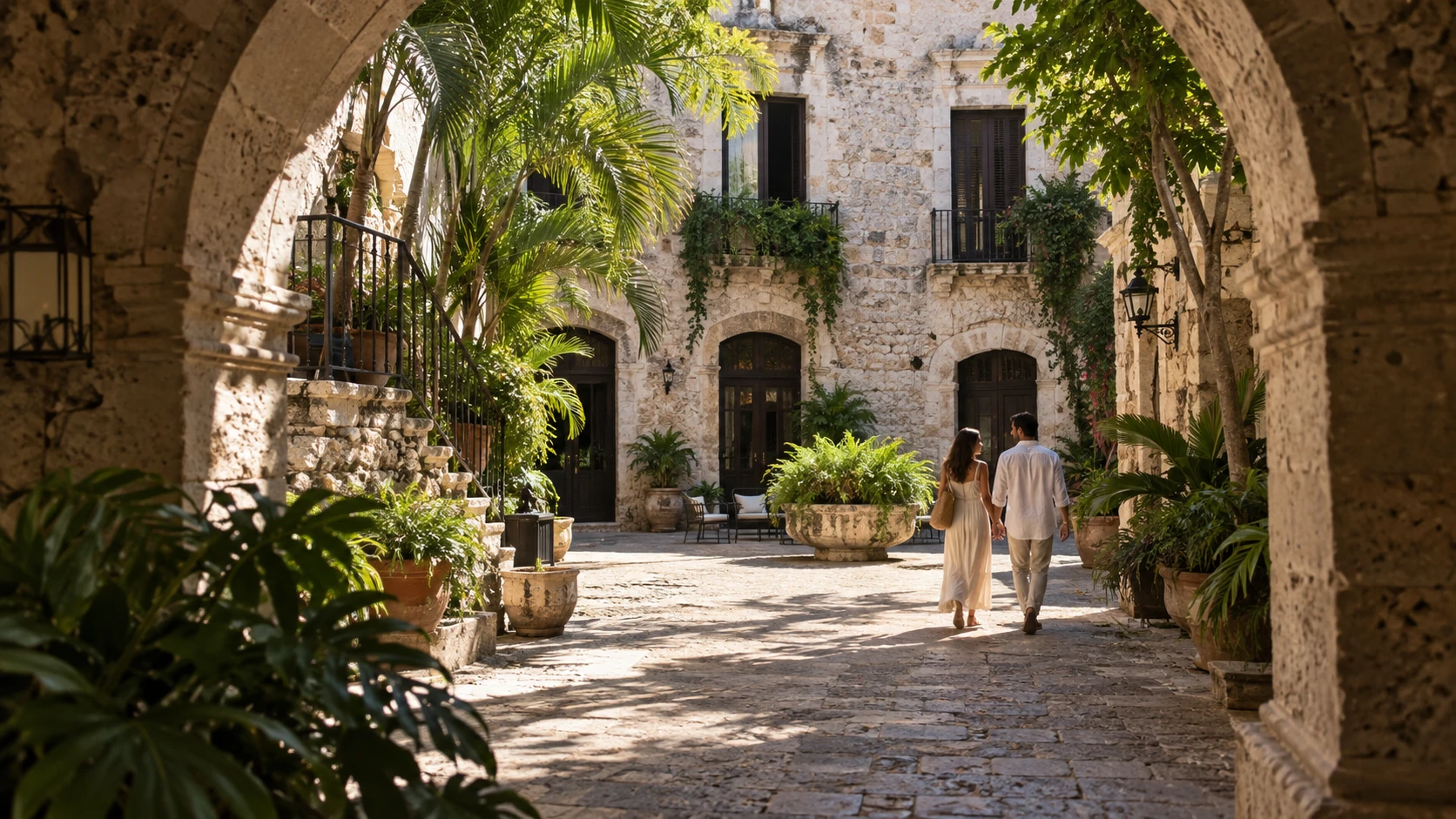
The oldest European-founded city in the Americas: the Zona Colonial's streets, the country's best dining and nightlife, and no beach in sight.
Why choose it: The UNESCO-listed Zona Colonial — the hemisphere's first cathedral, fortress and paved streets; The country's deepest restaurant, museum and nightlife scene; The central hub: every other region connects through the capital.
Tradeoff: There is no beach day without a drive — pair it with a coastal stop.
Juan Dolio
Santo Domingo & the South
The capital's beach town: condos and a strollable seafront under an hour from Santo Domingo — practical, unpretentious, and closest of all to SDQ.
Why choose it: The shortest beach-stay arrival from Santo Domingo's airport; Condo and apartment stays with a walkable malecón; Easy to combine with a capital city visit.
Tradeoff: The beaches are pleasant, not postcard-famous — the east coast wins on sand.
Samaná Peninsula
A European-flavoured boutique beach town: small hotels, the sand in walking distance, and a restaurant scene built by Spanish, Swiss, French and Italian owners.
Why choose it: The country's best walk-to-dinner beach town — no resort gates between you and the food; Boutique hotels, guesthouses and villas instead of megaresorts; Playa Bonita and Cosón are minutes away.
Tradeoff: Getting there crosses the peninsula — the arrival is the price of the vibe.
Samaná Peninsula
The bay town for nature days: humpback whales in season, the El Limón waterfall behind, and the Cayo Levantado boats at the pier.
Why choose it: Humpback whale watching in season, straight from the town pier; El Limón waterfall and bay excursions on the doorstep; A working Malecón town, not a resort strip.
Tradeoff: Outside whale season it is a quiet base, not an event.
Samaná Peninsula
The end-of-the-road village at the peninsula's tip, where the pavement stops and Playa Rincón, Frontón and Madama begin.
Why choose it: Playa Rincón and the wild beaches — among the country's most beautiful and least built; Eco-lodges and small hotels with genuine quiet; Boat trips and diving from the village beach.
Tradeoff: It is the longest common arrival in this list — you go for a reason.
North Coast
The original Dominican resort coast: a Victorian amber town with a cable car and fortress, and the Playa Dorada and Cofresí hotel complexes either side.
Why choose it: Real sightseeing with your beach: the cable car, Fortaleza San Felipe and the amber museum; Playa Dorada's compact golf-and-resort complex; A history-and-beach mix no east-coast zone offers.
Tradeoff: Hotels sit apart from the town — the coastal road is the spine of every stay.
North Coast
A sheltered bay town with a long-settled international community, easy swimming and the north coast's diving base — built for independent, longer stays.
Why choose it: Sosúa Bay's protected water is the north coast's easiest swimming; A walkable centre with restaurants and long-stay rentals; The region's diving and snorkelling hub.
Tradeoff: Parts of the nightlife scene are famously adult — choose your street.
North Coast
The wind capital: kiteboarding on the bay, surf at Encuentro, one beach-bar main street, and a young international crowd that stays for weeks.
Why choose it: World-class kitesurfing and windsurfing conditions on Cabarete Bay; Surf-town nightlife and a walkable one-street centre; The strongest solo and long-stay scene in the country.
Tradeoff: The wind that makes it famous rules out glassy-calm swimming most afternoons.
Jarabacoa
Mountains & the Cibao
The country's adventure-mountain town: rivers, waterfalls, rafting and Pico Duarte trailheads in the pine-covered Cordillera Central.
Why choose it: White-water rafting, canyoning and the Jimenoa and Baiguate waterfalls; Pico Duarte — the Caribbean's highest peak — starts here; Cool mountain air and lodge stays instead of beach heat.
Tradeoff: There is no beach — this is a deliberate inland choice.
Constanza
Mountains & the Cibao
The high valley: the coolest inhabited corner of the Caribbean, flower and strawberry farms, and genuine sweater-weather nights.
Why choose it: The highest, coolest valley in the Antilles — a different climate entirely; Farms, pine forest and the Valle Nuevo national park above; Absolute quiet with lodge and cabin stays.
Tradeoff: Remote mountain roads: the drive up is part of the commitment.
The Southwest
The larimar coast: the Sierra de Bahoruco dropping straight into the Caribbean, rivers crossing pebble beaches, and small eco-hotels along a slow coastal road.
Why choose it: The country's most dramatic coast road — mountains meeting the sea at every bend; Larimar country, Lago Enriquillo and cloud-forest excursions; Eco-lodges and small hotels far from any strip.
Tradeoff: Beaches are wild and often pebbled — swimmers should pick their coves.
The Southwest
The frontier: kilometres of empty protected sand at Bahía de las Águilas inside Jaragua National Park, reached through Pedernales and Cabo Rojo.
Why choose it: Arguably the country's most pristine beach — and it is protected, with no hotels on the sand; Eco-camps, small lodges and boat access through Cabo Rojo; The region everyone says will boom — this is what 'before' looks like.
Tradeoff: The longest logistics in this guide; you commit to the journey.
Bahía de las Águilas is a protected beach inside Jaragua National Park — you visit it from Pedernales or Cabo Rojo; nobody sleeps on it.
Punta Rucia / Cayo Arena
North Coast
A far-west fishing village with a shallow turquoise bay — and the launch point for the Cayo Arena sandbank, one of the country's best snorkel trips.
Why choose it: Cayo Arena's sandbank snorkelling leaves from this beach; A genuinely untouristed coast between Puerto Plata and Montecristi; Calm, shallow bay water in front of the village.
Tradeoff: Cayo Arena is a boat excursion, not a place to stay — the village is the base.
Cayo Arena (Paradise Island) is a sandbank you visit by boat from Punta Rucia — it has no hotels.
Mountains & the Cibao
The second city: the Cibao's capital of tobacco, merengue and monuments — a working Dominican city with its own airport and the mountains next door.
Why choose it: Cigar culture, the Monumento and a real city food scene without tourist pricing; STI airport makes it the practical gateway to the Cibao and the north; Jarabacoa's mountains are a short drive for day trips.
Tradeoff: No beach and no resort scene — this is city travel.